Showing posts with label Downright Creepy. Show all posts

Saturday, October 4, 2014

House of Dark Shadows (1970)

"The Madonnas rest high above.  The lion's head watches the dove.  And in the tomb beneath the hill, the secret flame blows bright and still."


In 1970, a theatrical version of Dark Shadows was released in theaters and was quite profitable for MGM. It was called House of Dark Shadows and remains to this day a creepy, atmospheric and frightening movie. Directed by series creator Dan Curtis, it combines the story of the introduction of Barnabas Collins with the story of his obsession over long-lost love, Josette DuPres.

In order to successfully consolidate what occurred over the course of 154 TV episodes into a 97-minute movie, Curtis and screenwriters Sam Hall and Gordon Russell, also Dark Shadows veterans, had to take some liberties with the story. They did a remarkable job of honoring the original series while at the same time producing a stand-alone movie experience. In essence, they eliminated the character of Victoria Winters (actress Alexandra Moltke had left the series by then) and turned the character Maggie Evans into both the Collins family governess and the possible reincarnation of Josette DuPres.


Since the movie was filmed three years into the TV show, but was telling a story that was two years old, many current cast members got to participate as different characters. Virtually every familiar face from Dark Shadows, the series, appeared in House of Dark Shadows, the movie. And the character of Professor Elliott Stokes (whom I liken to Van Helsing from Dracula), introduced in the series long after the original Barnabas storyline, became a prominent role in the movie.

While the faces are the same, you might at times think the actors behind them are different due to the improvement in their thespian skills. They are actually acting, instead of reading (and forgetting) lines. Also, the sets are positively sturdy when compared to the series. Filmed on location in upstate New York, there’s no fear that they’re going to topple over onto the cast. And they are milked for all their Gothic worth… spider webs, fog, dust, decay and, yes, a lot of dark shadows. Finally, the brief musical cues of composer Robert Cobert, while familiar, are beefed up and extended, providing a marvelous genre soundtrack.


Even if I were not a Dark Shadows fan, I would love House of Dark Shadows. I wholeheartedly recommend it as a classic horror movie of the 70’s. It doesn’t hurt that Barnabas Collins is portrayed almost completely as sadistic and evil, with little of the romantic pining he did later in the series. He’s not really a “reluctant vampire” at all in the movie, which makes him (and it) all the more terrifying.

When House of Dark Shadows was first released, my aunt Nancy took me to see it at the Chief Theater in Enid, Oklahoma. Going after school on a weekday, we arrived late; I realize now it was about 35 minutes into the movie. (After Carolyn’s death-by-vampire, David was playing at the deserted swimming pool on the Collins estate.) 35 minutes later, when Barnabas was transformed into an old man, I told Nancy I wanted to leave. She asked, “To the bathroom?” I replied, “No, I want to leave the movie.”


Once again, as a child, Dark Shadows had terrified me. I have no doubt it was a huge influence on my ever-growing, adult fondness for horror movies. It will always have a spot in my heart, regardless of its incarnation.

For more of my thoughts about Dark Shadows, visit Downright Creepy.


Tomorrow:  Trog!


Sunday, February 24, 2013

Thoughts On Turning 50

About this time last year, I started planning a cruise for my 50th birthday.  My friends and family seemed excited and told me they were "on board" (pun intended) for the experience.  But as the months passed, they  began bailing on me for various and mostly understandable reasons.  It was with mixed feelings that I officially cancelled the cruise following Michael's heart scare incident in Pittsburgh.  Truly, we didn't know at that point what his condition would be for a departure date of February 18.

Had so much not been going on at the time, I may have thrown a pity party for myself.  I didn't want to be selfish, but years of letting my mind go down perilous paths, I glanced toward the road of "if they really wanted to be with me on my 50th birthday, they would".  I mean, Jeff and Raul snapped their fingers and drew a large crowd for his birthday last year.  I guess I didn't have enough friends (or the right kind of friends) to be able to do that.  Poor me.

No offense to those who were still planning to go.  It would have been a great time, surrounded by a few friends and some of my family.  But it honestly would not have been the birthday I originally wanted to celebrate.  As it turns out, I got exactly what I wanted by staying right here in Kansas City!  Our friend Jack suggested a joint birthday party for me and Gerald in the "nest" at 75th Street Brewery.  It had been done before, but rather than plan nothing at all, I agreed to do it.

Little did I know it would be a catalyst for bringing all of my family together for the weekend.  It was absolutely the best gift I could ever receive!  Kate and her boyfriend, Pete, flew in Saturday morning and we spent the day with Michael and his mother.  Mom, Dad, Jay (plus surprise guest Adrian) and the Siegels arrived that evening.  Some experienced my debut as host for Downright Creepy's Remake/Rewind movie screening, but we all enjoyed brunch the next day and attended the party at 75th Street Brewery.


While that was all I could ask for my birthday, the icing on the cake (literally) was the theme for my 50th birthday.  Take a look at this beautiful cake!  While Barnabas Collins cried that he was turning 50, I cried in excitement as I opened my present.  Everyone chipped in to buy something I would never buy for myself, but would nevertheless enjoy for my next 50 years: the complete Dark Shadows series on DVD; yeah, that awesome set of 131 discs that comes in a giant coffin.


So how do I feel about turning 50?  Well, I feel like I've reached a true landmark, but not because of my age.  Instead, it's because I am perhaps the happiest I've ever been.  I've been with a loving partner for 14 years now (we celebrated our anniversary on the 19th) when I never conceived being with someone for more than 5 years!  I adore my job and, for the first time I can remember, am not even thinking about a different one!  (They seem to like me, too, and I feel truly appreciated.  I didn't think that was supposed to happen at work.)

Further, I actually have an outlet for writing!  The website has turned into more than a hobby for me and has given me great opportunities (for example, I'm going to Comic-Con again this year).  My brother thinks it's fantastic that I have something other than work in my life that I honestly enjoy doing.  I feel like I have more ahead of me and can go with it wherever I want.  (Jay and Adrian think I should become a local horror host, but I want to write a book.)

I was telling people that by turning 50 I was only "halfway there".  But that statement suggests that it's all downhill from there.  I do not feel like I am 50 years of physical age, so who's to say I'm not even halfway there yet?  No, I'm not as energetic as I have been in the past, nor is my mind the receptacle of memories that it used to be.  But I do feel like the future is wide open and full of possibilities.  In that sense, I've recently celebrated "just another birthday".

At the screening Saturday night, Tim announced to the audience that I was turning 50.  At first, I wished he hadn't said my age.  But afterwards, someone said, "You're not really 50, are you?"  "No," I said, "Tim was just giving me a hard time."  To which she replied, "I didn't think so.  You don't look anything like 50."  You know, the specific age doesn't really matter; it's the perspective on it.  I remember more traumatic birthdays on my 30th and 40th.  Maybe it's true that I'm not getting older; I'm getting better.

In any case, I can't wait to see what happens next...


With thanks to: Gene Owens, Karine Owens, Jill Siegel, Jeff Siegel, Brooklyn Siegel, Jay Owens, Adrian Castillo, Kate Owens, Pete Sahlberg, Michael Lendabarker, Mari Ann Lendabarker, Karen Hall, Jack Harris, Gerald Hughes, Jason Chaffee, Tim Canton, Eric Havens, Eric Kuhl, John Swan, Jeff Deutsch, Maria Leslie, Natalie Leroy, Cathy Weigel, and everyone who wished me a happy birthday on Facebook.


Friday, October 26, 2012

Why Are There No Good Horror Movies Based on Video Games?

Today, the latest cinematic adaptation of a horror video game is released in theaters, Silent Hill: Revelation.  It's been six years since the original opened and eventually earned just under $49 million toward its $50 million estimated budget.  So its timing and purpose is questionable.  I'd like to think there is a compelling reason for it being made, but the track record for movies based on video games indicates otherwise.

Consider these facts about nine movies that have been released in the last ten years:

·        Their average percentage on Rotten Tomatoes is 18.67%.

·        Their average rating on IMDb is 4.91 out of 10.

·        I've seen only eight of them, but my average rating is 5.25 out of 10.

·        The best-received movie has been the first one, Resident Evil (2002) with 34% on RT and 6.6/10 on IMDb (I rated it a 7/10).

·        The worst-received movie has been Alone in the Dark (2005) with 1% on RT and 2.3/10 on IMDb (I rated it a 1/10).

Forget ratings, though.  These must have been money-makers, right?  Well…

·        Their average estimated budgets were $350.0 million against box office grosses of $309.7 million, making an overall loss of -$40.3 million.

·        Only four out of ten have made a profit (one broke even).

·        The most profitable has been Resident Evil, with a whopping $7 million.

·        The least profitable has been the newest one, Resident Evil: Retribution (2012) with a loss of $23 million.

Historically, horror movies based on video games have not been received well critically or financially.  You could safely say there has not been a good one made.  I don't remember most of the ones I've seen; frankly, I don't want to remember House of the Dead (2003) or Alone in the Dark.  But I did recently re-watch the original Silent Hill (2006) to prepare for reviewing the sequel for Downright Creepy.  The reasons it doesn't work might be used to explain why horror movies based on video games in general don't work.
 

Disclaimer:  As I've written before, I do not play video games.  Therefore, any discussion is based solely on the merits of the movies themselves rather than a comparison of them to the source material.  I will likely make assumptions about video games that are incorrect.

Let's start with story.  Do video games really have stories?  I hear they do, but surely they are only loose frameworks for the action taking place inside them.  I'd be more inclined to believe that video game "stories" are instead "concepts" that set-up their players to shoot at armies of zombies, aliens and monsters.  Granted, some of the concepts are good: government experiments gone wrong, secret societies ridding the world of vampires, etc.  But do they really drive the outcome of the games?  Aren't they ultimately about how many "things" you can kill?

The problem with adapting a movie from a video game is that you have to offer more than just the concept.  A movie is not interactive; the consequences are scripted and not based on any action the audience takes.  So it must go above and beyond the set-up.  There must be creative screenwriters to turn the concept of a game into the fully-realized story of a movie.  That may be a risky proposal, because doing so could potentially make the movie too different from the game.

Now let's talk about the visuals.  If the story of a movie based on a video game is allowed to stray, the visuals cannot.  Since I've claimed that games have no stories, it stands to reason that what you see in a game is what you want to see in a movie; otherwise, it's not the same.  In general, filmmakers have done a good job with style in these movies.  It often matches the dark, creepy feel of the games.

It's these two elements combined that have failed in previous adaptations of video games.  We've seen more style than substance, which isn't enough to sustain a full-length movie.  No one has figured out how to be faithful to a game while going beyond it to make a compelling movie.

Speaking of compelling, that's what the characters ought to be.  It's problematic, though, because video games have very one-dimensional characters who don't develop over the course of their games.  In a movie, they must have other dimensions and they must change from beginning to end.  It also helps if they're believable and relatable.  This is an obstacle that many movies face, regardless of their genre.  It's seems difficult for any movie to provide fully-developed characters for whom we care.
 

The "story" of Silent Hill (the movie) takes place in what is literally a ghost town.  Hidden beneath what the world sees in the sunshine is a town obscured by smoke from coal fires burning beneath it.  Ash falls like lovely winter snow.  At night, sirens blare, warning the townsfolk about the creatures that will rise.  A mother desperately searches for her missing daughter in the "alternate universe" version of Silent Hill.

It's a great set-up, one that I assume comes directly from the game.  And screenwriter Roger Avery (The Rules of Attraction) adds some substance to it in the second half.  I just don't like what he's added.  It's simultaneously too little and too much, somehow both action-packed and anti-climactic.

The visuals in Silent Hill are amazing.  In fact, based on what I just wrote about the story, it's all about style for me.  Director Christophe Gans (Brotherhood of the Wolf) and his crew paint a terrifying picture with all kinds of creepy creatures.  But not only does the story suffer, the characters do, as well.  They are entirely one-dimensional, as if lifted directly from the game.

Despite what anyone thinks of Silent Hill, it's commonly believed to be too darned long.  I agree.  At 125 minutes, at least 25 could have been trimmed.  But I disagree with most people about what's good and bad about this length.  Most think the first half, all visual, is slow and boring and that it only picks up in the second half when the story kicks in.  I actually prefer the first half and the atmosphere it creates.  The second half story and characters don't work for me, and that's the impression with which I'm left.


As a final thought about why horror movies based on video games don't work, I wonder if there are really two different audiences for movies versus games, even though they share the same subject matter.  Movie audiences are passive; they're required to do nothing but sit still and be quiet.  But game players are active; they're required to think fast and physically push buttons.  To have a successful adaptation of a video game, you must crossover and offer something for both audiences.  Failing that, it might be a lost cause to win over game players.  Therefore, why not focus simply on making a good movie?  That might just result in approval from an audience as well as profits for the studio.


Friday, October 19, 2012

3 Rules for Found Footage Movies


In two previous Countdown to Halloween posts, I wrote about the "found footage" sub-genre.  These movies consist of supposedly real film or video recordings that have been found, usually left behind by the missing or the dead.  I predicted that the subgenre would fade in a couple of years, popping up again when someone thinks they have a fresh approach.  In a USA Today interview yesterday, chief analyst for Exhibitor Relations, Jeff Bock, disagrees by saying, "I don't think we'll see the popularity dying off soon."
Bock probably says that because the interview is part of a promotional feature on the latest entry in the sub-genre, Paranormal Activity 4.  Despite my prediction that the subgenre won't last, I do like a good found footage movie.  But what makes a found footage movie good?  Since they're largely based on a gimmick, that gimmick can quickly wear thin if the movie doesn't offer something else.  Believable characters or interesting stories would be great; however, if the gimmick pays off with some good scares, that's sometimes enough for me.
The first rule for a found footage movie should be that it's realistic in the situation that someone would be carrying a camera and filming the scenes that it shows.  In my favorite found footage movies, this is mostly the case.  Of course, The Blair Witch Project did it best.  The narrative was not smooth, but the footage was so authentic, it didn't matter.  Nearly as good (for me) was Cloverfield.  The Paranormal Activity movies and Chronicle went one step further by including additional sources of found footage, such as multiple cameras and TV news reports.

The found footage movies I like to a lesser extent are ones from which I am pulled out of the action once or twice by the thought, "Wait a minute; why was someone filming that?" or, even worse, "Now who the heck was filming that?"  I've had this issue with Quarantine, The Last Exorcism, Troll Hunter, Apollo 18, REC 3: Genesis and V/H/S.  Filmmakers take liberties all the time, so to keep the narrative flowing, I understand why they'd push the gimmick a little.  But the minute it loses authenticity, the more I'm reminded that none of it is real.


The second rule for a found footage movie should be that it has a good ending.  Think about it.  If films or recordings are found from someone who disappeared or died, something horrible probably happened to that person.  That means he or she would have suddenly stopped filming.  So, to satisfy the first rule, the ending almost has to be abrupt.  But then there is the danger that it doesn't satisfy audiences that way a typical narrative might.  Therefore, it absolutely must have a fantastic ending, one that will shock without being silly.
 
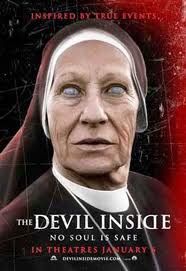
That is obviously not always easy to do.  I've stuck with several found footage movies that are entirely ruined by their endings.  Paranormal Activity 3?  Really, witches?  The Last Exorcism?  I don't understand what I was watching.  And The Devil Inside?  It didn't break this rule in that it had a sudden ending completely appropriate for the story; however, it broke the rule for any type of movie, period, by being just plain stupid.


The third rule for a found footage movie should be that it adds something new to the gimmick.  There has to be a reason to use it.  For example, Paranormal Activity?  Good; ghosts (and/or demons).  Cloverfield?  Good; something different, aliens.  Diary of the Dead?  Good; something different, zombies.  Quarantine?  Not so good; zombies again.  The Last Exorcism?  Good; something different, possession.  The Devil Inside?  Not so good; possession again.

The franchise that seems to break this rule without consequence (yet) is Paranormal Activity.  Part two did so by ultimately being a prequel instead of the sequel audiences expected it would be.  It didn't really matter how it ended.  The satisfaction came from the realization that you were fooled by the entire movie.  Part three did so by going back even further and adding a previously-unknown mythology.  I didn't like the specific mythology, but it was still a fresh angle for a story that you didn't think had one left.


I'm writing this and posting on release day for the latest found footage movie, Paranormal Activity 4.  I actually have high hopes for it because the franchise has managed to add something new each time.  But has it run out of tricks?  It won't be enough to simply have apparitions appear and pots and pans fall, even if it does startle us.  We've seen that before.  It needs to follow the three rules I discussed above: be realistic in the situation, have a good ending and add something new.  The first two are probably honored, but it's the third one that worries me.
(To read my complete review of Paranormal Activity 4, please visit Downright Creepy later today.)


Tuesday, October 16, 2012

30 Days of Night: Page to Screen Pt. 2

One of the biggest differences between the comic and the movie versions of 30 Days of Night may seem subtle, but it represents a difference in the overall dynamic that causes the movie to lose much of the "heart" that's in the comic.  In the comic, Eben and Stella are happily married.  In the movie, they are estranged.  At some point in the creative process, someone must have decided that it would be better dramatically if, during the story, the two realized they really did love each other and should never have parted.  I don't necessarily agree.

It's easy to believe that the stress of the situation would cause Eben and Stella to think they made a mistake. But, if two people have enough personal problems that they would separate, those problems are still going to be there after the crisis goes away.  Call me a Mr. Half Glass Empty, but I wouldn't see their relationship lasting.  It turns out that it's a moot point, because their relationship ends up exactly the same in the comic as it does in the movie.  I'm just saying, for me, it would have been more effective to show how much they loved each other all along.  Call me Mr. Glass Half Full, but I think a consistently happy relationship is more romantic than an occasionally turbulent one.  Their relationship in the comic is more heartbreaking for me than their relationship in the movie.


A final way to fill time is to explore new themes.  30 Days of Night, the movie, attempts to weave the "importance of family" theme throughout its story.  Not only are the characters of Eben's grandmother, Helen, and younger brother, Jake new to the movie version, but Eben often opines about family.  "Such and such is what family does"… "You don't do such and such to family"…  Like most of the other additions to the movie, these are blatant and distracting.  In its efforts to add depth, it just comes across as artificial.
However, I do like the more subtle implication that the vampires are family, also.  When the aforementioned ultraviolet light burns a lovely young vampire woman, the head vampire (Danny Huston) is obviously distraught and subsequently kills her to put her out of her misery.  That one scene is more touching than any of Eban and Stella's drama or Eban's philosophies about family.

It's odd that the movie jettisoned two entire subplots and one major character from the comic that could have more satisfactorily occupied time in favor of these failed attempts.  In 30 Days of Night, the comic, a group in Louisiana uncovers advance warning of the vampire invasion and races against time to reach Barrow in order to collect evidence.  Also in the comic, the character of a head vampire named Vicente arrives to chastise Marlowe and crew for drawing attention to themselves; he orders everyone killed and the town destroyed.  (In the movie, the town is destroyed simply to make the massacre look like an accident; there is no ulterior motive.)


While the story elements of 30 Days of Night, the movie, are not completely successful in transition from 30 Days of Night, the comic, I'm happy to say that the visual elements fare much better.  In the comic, most pages are gray, the only color being splashes of red (blood) and orange (fire).  Not as literal a visual translation as Sin City, the movie still does a great job of duplicating the look of the comic, although with its snowy landscapes and blizzards, it uses more white than the comic.  That makes an even more stark contrast for all the blood that is spilled.

And the vampires are fantastic.  In this one area, the movie actually improves upon the comic.  In both, the vampires have mouths full of teeth, long fingernails, black eyes and blood all over their faces.  But in the movie, you get movement, and its vampires are fast, brutal killing machines.  They don't so much suck your blood as savagely tear your throat apart.  They also have their own language, a nifty addition that probably could not have been successfully sustained in the comic.

I've tried to objectively demonstrate the issues to consider when translating a comic book into a movie.  Unfortunately, this approach has emphasized the failings of one movie.  If you want to have some fun, compare for yourself one scene from both versions.  In the comic, it begins on page 15 of the graphic novel; in the movie, it starts at just over 18 minutes from the opening frame.  It's the scene where a mysterious stranger in a restaurant simply wants to order some raw meat.  The movie lifts some dialogue word for word from the comic, so it’s the perfect way to examine how two different mediums tell the same story.  This scene may make the process seem easy, but if 30 Days of Night is any indication, it's a lot harder than it looks.


If you enjoyed this article, check out my review of the direct-to-DVD sequel, Dark Days over at Downright Creepy...
 

Monday, October 15, 2012

30 Days of Night: Page to Screen Pt. 1

In recent years, comic books have become increasingly popular as source material for movies.  Once limited to superhero adventures, new genres are increasingly being translated from newsstand to multiplex, with varying results.  What things have to be considered when turning a comic book or graphic novel into a movie?  To find out, I dissected one of the most popular horror comics ever, 30 Days of Night, and its cinematic counterpart of the same name.

In general, I would consider 30 Days of Night, the movie, made in 2007, to be a fairly faithful adaptation of the IDW comic, which was written by Steve Niles and drawn by Ben Templesmith.  In each, the story begins in Barrow, Alaska on the eve of the annual period during which the sun does not rise for 30 days.  A band of clever vampires has realized that invading Barrow would provide them with a month of unlimited feeding without the hassle of having to sleep during the daylight hours.  General mayhem ensues.  The framework for the story is simple, and it is identical in both comic and movie.
Supposedly, Niles wrote the first draft of the screenplay, so if not perfectly faithful to his own material, we can assume it at least started out close to his original vision.  However, two subsequent screenplay revisions by two different writers (Stuart Beattie and Brian Nelson) altered details of the story in ways that remain unknown.  It would be easy to blame them for any shortcomings of the movie, but we can't be sure they were really the ones responsible.

The fundamental concern in translating the comic to a movie must have been that the original comic book version of 30 Days of Night is only three, 22-page issues.  And since many of the pages consist of single panels with no dialogue, a two hour movie needs a lot of original material.  This is where its transition to the big screen fails the most for me.  While both comic and movie span the same length of time (30 days), the movie chooses to break that time into more scenes than the comic does.  The problem is that these scenes are formulaic: our heroes assess the situation, they argue about staying where they are or moving to a different hiding place, Eben (Josh Hartnett) decides to go outside, Stella (Melissa George) joins him, the vampires attack, Eben and Stella return to find something bad has happened.  Lather, rinse, repeat.

Individually, some of these scenes are creative, exciting and gory, but one after the other, they become predictable and boring.  Plus, it makes the characters seem less intelligent.  You'd think after the second or third time of doing something, they'd learn not to do the same thing again.  Granted, the structure of the story puts constraints on what can happen between point A and point B; straying too far outside the box could dilute the constant feeling of dread and desperation that the comic conveys so well.  However, this is a problem that I'd hoped the movie would do a better job of overcoming.
Another way to fill time is to add more characters, which 30 Days of Night, the movie, does.  But this is problematic, also.  First of all, wrapped in winter coats, hats and scarves, lurking in the dark or wandering through snow storms, it's hard to recognize anyone.  Second, the purpose of existence for most of the additional characters is simply for them to be killed, so there's not much time to invest in them as characters.  (The movie doesn't try: the first time we even hear some of their names is right before or right after they've been killed.)  Finally, if a few new characters do have a higher purpose, it's only as a device to further the plot.  For example, Helen, Eben's grandmother, exists because she has cancer, she has cancer so she can smoke marijuana, she smokes marijuana so she can grow it at home, and she grows it at home so she can have an ultraviolet light to later test as a vampire deterrent.

Movies use characters to advance their plots all the time; it just seems particularly obvious here.  And speaking of obvious, there's a scene early on that introduces a "muffin cruncher" in the town's power station.  You don't have to be a genius to know that later on, someone or something is going to meet a grisly destruction in its deadly teeth.  Again, this is a common device that movies use.  It's just that in 30 Days of Night, it seems more heavy-handed than usual.  And at its shorter length, the comic avoids such clichés.

Please return tomorrow for part two, where I'll offer a visual comparison of one specific scene from both the comic book and the movie.  And if you like what you're reading, check out my review of the direct-to-DVD sequel, Dark Days over at Downright Creepy...